Archive for ‘Roaming’

Posts about our travels…

Stone Town and the Palace Museum

Today we walked around Stone Town. First we went past my favourite building – it was all painted turquoise!! On the Old Fort, there was a Girl Guide symbol! We also found a cafe for Vivi!

Then we went to the Palace Museum. A guide showed us round. The Sultan lived there, which is like a King. He had 4 wives. One was really fat and they had a special chair made for her! There was lots of ivory from elephants. And some of the chairs were made of a black wood called ebony. It was all hand carved, and it looked beautiful. I liked the love seat.

We also saw his car – though I don’t think he used it very often, because the streets were so narrow. Also he could just stand on his balcony and wave to people. He also had a carriage that was pulled by people.  But he had to stop using it.

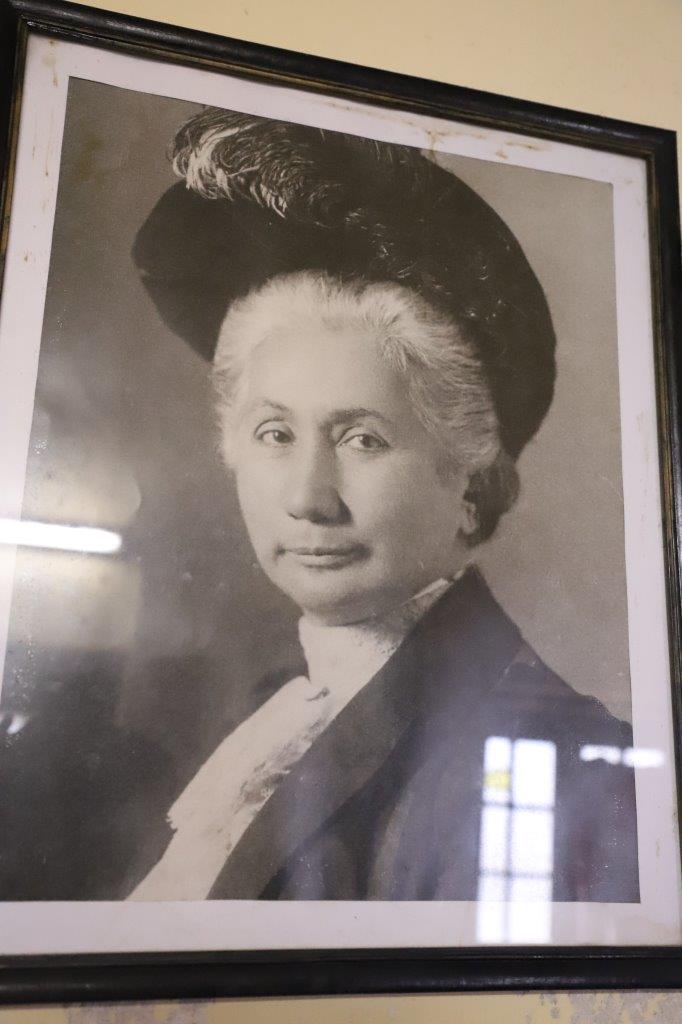
We also learnt about the Arabian Princess Salme. She fell in love with a German man and ran away with him to Hamburg. (ed. She looks like Putin… deeply creepy)
IMG_0864

We walked around the markets and Genevieve and I bought a sarong, called a kanga. Genevieve’s is purple and mine is blue and white. People here wear them, and they also use them to carry their babies. They also use them for curtains and seat covers. They are really pretty. The have a motto written on them in Swahili. I liked the markets, they reminded us of Morocco. My favourite shops were the ones with paintings. I liked the ones with lots of animals.

IMG_0894


Slave Market

We took a boat from Dar es Salaam to Zanzibar. We had to get up very early, then the taxi didn’t arrive. The boat was a catamaran, it took 2 hours to get to Stonetown.

We were really hungry, so went to a cafe near the Slave Market Museum. I had a blueberry ice cream and some chicken samosas. I also had a pineapple juice. It took ages to arrive so we thought they had to grow the pineapple!

Then we went to the slave market museum. There were lots of information boards, with lots of words and pictures. Mummy read out all the interesting bits. We learnt that the slaves came from all over Africa and had to walk to the coast.  Some of them walked the same way that we drove! They were in slave caravans. The slaves were tied up in chains and it was hard for them to walk. After they got to the coast, the slaves were put on boats and taken to Zanzibar. Then they were marched down the street and sold. An adult slave cost the same amout as 3 yards of cotton. We went into the slave holding cells. There wasn’t much room, and there were no toilets.

One slave girl was buried alive. Another boy, who was 6, tried to run away. For punishment he had a chain to a log. The only way he could move was to carry the log on his head, and it weighed nearly 15kg. He was attached to the log for a year, before a missionary freed him.

IMG_0812

Slavery was made illegal in the 1870’s, but there is still slavery around the world today. Such as children who are made to go to work, rather than school. I think slavery is bad.

IMG_0816

After the museum there was a monument. Then we went into the Anglican Cathedral. It had an altar with gold mosaic, like the Basilica in Venice. It also had pictures of bible stories in brass.


The drive to Dar es Salaam

After the coffee farm we drove to Dar es Salaam. It took us a long time! First we drove through Kitulo Plateau National Park. It is famous for its plants, but Daddy thought it looked a lot like New Zealand (round Golden Downs) There were lots of pine trees and you could see people drying planks of wood at the side of the road. They cut their trees into boards in the forest, rather than take the logs to a saw mill.

There were also some big rock hills that were formed by volcanoes. We did two sneaky wild camps.

Then we got to the Indian Ocean near Mtwara. We went to a supermarket, but it didn’t have any fresh veges or fruit. I think people here buy fruit from little market shops. We stayed at a farm, where the owner didn’t speak much English. Daddy had to talk in sign language. The owner gave us a bowl of fruit – we weren’t sure what it was called. Daddy thought it was like a crab apple. It tasted sour and floury, but I liked it. We also collected some pretty white shells and painted them. We got a big fright when one of the shells got some legs sticking out of it and it started moving!!

After this we drove up the coast and spent two nights near Kilwa. It was a lot of fun swimming in the ocean. It was very shallow but nice and warm, like a bath. People here were collecting seaweed from strings tied to poles in the water. We also went on a hermit crab hunt. It was fun, they leave trails in the sand that look like bicycle tyre prints. We collected lots of shells too.

Then we drove to Dar es Salaam. On the way we got stuck in a big traffic jam. It was crazy. There were rickshaws and motorbikes weaving in and out of the cars. We ended up getting off the road and going through some very narrow village roads. We went to the Sunrise Beach Resort and on the way we went through a ford. We thought it would be quite shallow, but the water went over the bonnet of the car! It was a bit scary!

IMG_0784

We had another nice swim in the ocean, then we went to a storage place for our car. Tomorrow we are going to Zanzibar. I can’t wait!!


Coffee!

We left Zambia and drove to Tanzania. The road was very bad, with lots of pot holes and trucks in the way. Getting across the border took 4 hours! It was a nice, new and clean border post, but their computers were broken and couldn’t talk to the bank, so Daddy had to wait for ages until they agreed to accept cash and let us go. Daddy was very grumbly.

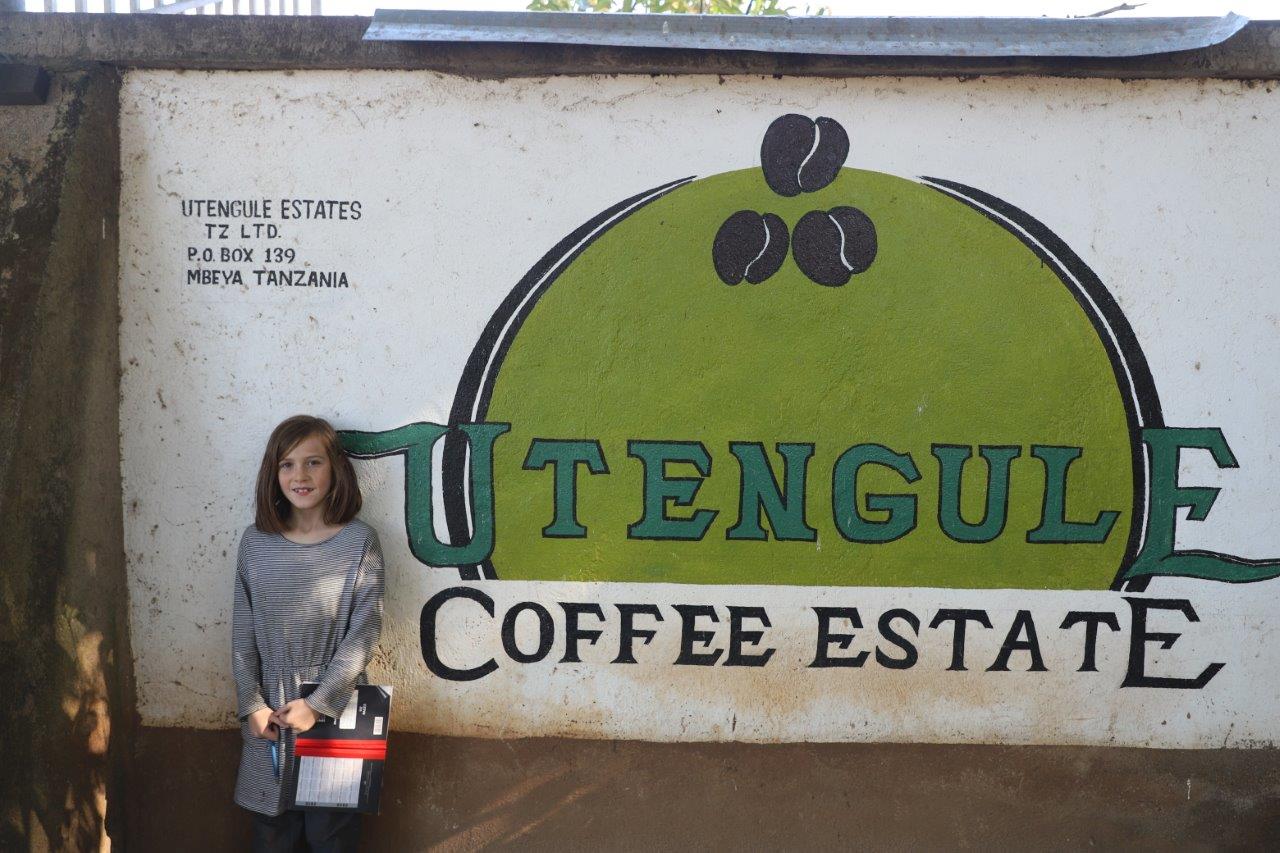
We drove to Utengule Coffee Lodge where instead of camping, we rented a huge bungalow with real beds and mosquito nets that look like princess beds.  I like this place very much, but not as much as Daddy because he loves coffee.

IMG_0594

We went on a big tour of the coffee plantation and learned lots of interesting things:

  • There are three main types of coffee plant – Liberica, Robusta and Arabica. Arabica is what they grow here, it only likes growing at high altitude. We learned that it also only fruits on what the man called secondary branches – Daddy said this was the same as apples.  He told us that the fruit are called cherries, and that unlike all other fruit they throw away the skin and sweet flesh, and keep the stone. (ed – they compost this, and feed the trees). Brown means the cherry is overripe, green underripe, and red is just right.
  • We learned all about the types of diseases coffee plants get – Daddy said this was very similar to peaches and nectarines. We saw leaves that had been hurt by rust and insects, and from trees that didn’t get the right minerals.
  • They grow all their own trees in their nursery – they have 20,000 baby trees ready to replace ones that get sick! They never sell or buy trees, as the man said the trees are their gold.  This means that their coffee plantation is unique and no other coffee tastes the same.
  • We saw the machine that they use to remove the skin and flesh from the beans.  The beans then get washed down a little river to where they get fermented just like beer!  This removes all the sugar.  They stir the beans with wooden paddles to avoid damaging them.  This is very important. There are two types of bean – sinkers (the best), or floaters (unripe or overripe).
  • The beans then get dried in the sun for a few weeks, sorted to remove bad ones that still have skin on them, then they get roasted or sent away to other people who want to roast them themselves.
  • We saw a little roasting machine and they roasted us some beans to take in the Taniwha! They know the roast is finished when they count the crackles, like popcorn!
  • I tried an espresso but it was yuck. Daddy drank it.  He said it was the best coffee that he had ever tasted.

When the tour finished we walked up a big steep hill and the view was good. Then we walked back to the bungalow and are having a restaurant dinner for the first time in ages! I like this place.

Going to the source of the Zambezi

After Lusaka we went north. The first night we stayed at a game reserve that had lions. We didn’t see the lions but we heard them roar. They were very loud, (and very early in the morning!) It had a nice playground too.

Then we drove on some really bad roads, they had lots of pot holes. Some were as big as the Taniwha! We also took 2 pontoons. That was fun. (ed. The photos don’t really do justice to the size of the pot holes!)

One night we stayed at the Kanzenzi Wildlife Camp. Seconds after we arrived, about ten children came to use the well. Mummy got the ball out and we did some catches. Then Mummy threw the ball at one of the children, and she joined in. Soon all the children were playing. Genevieve didn’t want to play with the ball, so Mummy laid the tarpaulin out and got out some colouring books. The children wanted to do that too. At the end they all took their pictures away with them. It was fun to play with the children.

The next day we had to use the well to fill our water tank. It was hard to pump the water.

Then we went to the source of the Zambezi. It is right on the border with the Democratic Republic of Congo. The Zambezi River is 2,574km long. It runs through Zambia, Angola, Namibia, Zimbabwe and goes into the Indian Ocean in Mozambique. We had to walk on some wooden paths to get to the source, but there was nothing there, except lots of mosquitoes!

That night we stayed by a river, and lots of people came to stare at us. When we had dinner, there were about 25 people watching us. Not many people spoke English. I didn’t like being watched. Some people called us Mzungu, which means white person.

Then we drove to the Mutanda Falls. It wasn’t really a waterfall, but some rapids in the river. It was pretty with lots of trees. We stayed two nights.

The next morning we walked to the primary school. We saw impala on the way, and we had to walk next to a busy road. There were lots of big trucks and we crossed a river with no hand rail!

The school has 550 children. There are only 2 classrooms. There are so many children, some go to school in the morning and some go in the afternoon. Children start school at age seven. The class room is very different to my old school. There is one big blackboard at the front, and there are lots of desks. The walls are plain cream and there are no books.  The government tells them to teach computing, but has only given them one computer! We think the teachers here have a very hard job.

Daddy drew a big map of the world on the blackboard, and we talked about where we had been and where we were going. Some of the children asked us questions.

(ed. We are considering what we can do to help this school. All ideas much appreciated!)